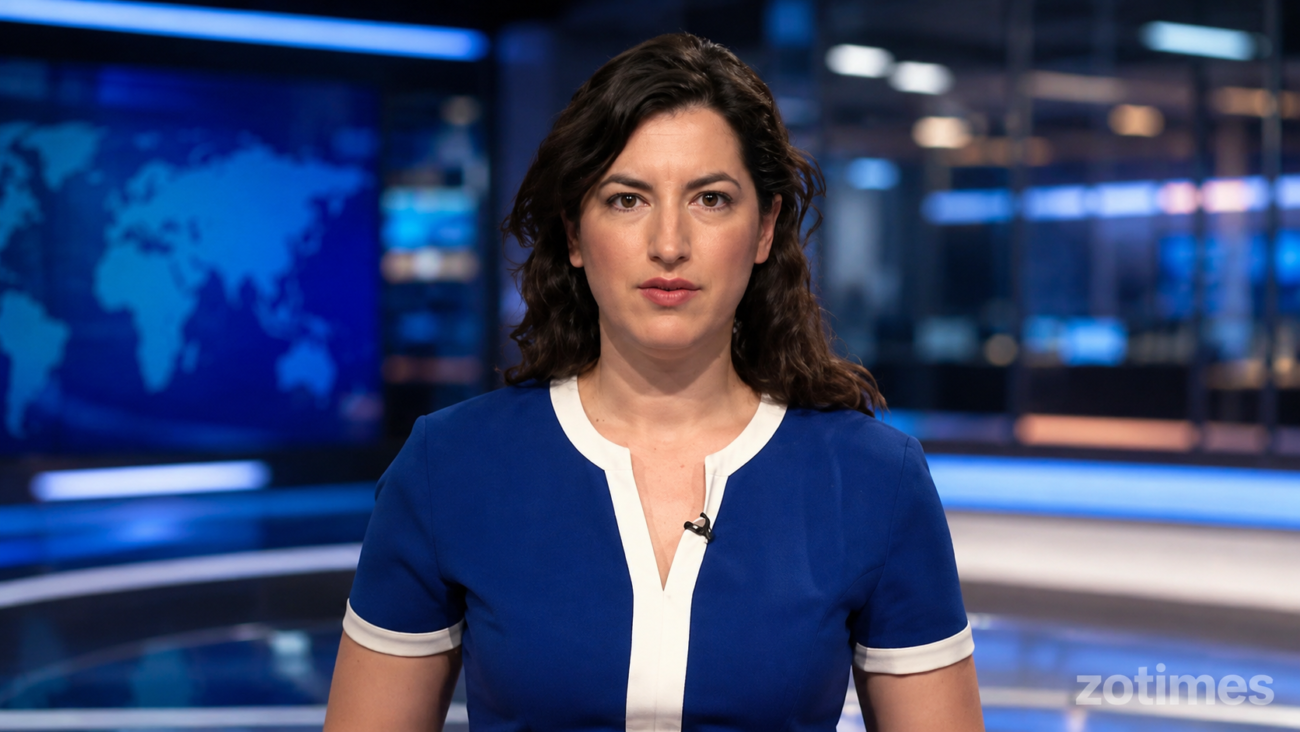
Yasmin Bodalbhai has built her public reputation in the demanding space where live television, public-service reporting, and regional journalism meet. To many viewers, she is a familiar ITV News presence: calm on air, clear in delivery, and attached to stories that often carry more human weight than the headline first suggests. Her name is most closely linked with ITV News and ITN, along with earlier work at ITV Central, where her reporting on children’s mental health services helped bring wider attention to families struggling for support. The public record around her personal life is limited, but her professional record is clear enough to tell the story of a journalist whose career has moved steadily from local radio and newsroom production to national television.
Bodalbhai’s biography is also a useful lesson in how working journalists become visible. Unlike actors, influencers, or politicians, television reporters often become public figures without turning their private lives into public material. Viewers may search for their age, partner, family background, salary, or net worth, but those details are often unavailable or poorly sourced. In Bodalbhai’s case, the strongest facts are connected to her work: her ITV roles, her award recognition, her reporting projects, and her move into national broadcasting.
Early Life and Family
Yasmin Bodalbhai’s early life and family background have not been widely documented in reliable public sources. That absence matters because a number of search-driven biography websites attempt to fill the space with claims about her parents, heritage, religion, marriage, and private life. Most of those claims are not supported by primary records, interviews, or clear sourcing. A careful biography has to draw a firm line between what is publicly known and what is merely repeated online.
What can be said with confidence is that Bodalbhai is a British broadcast journalist whose professional life has unfolded in the United Kingdom. Her career has connected her with local radio, ITV, ITV Central, ITN, and ITV News. Public professional profiles point to a route shaped by formal journalism training, newsroom experience, and broadcast work rather than sudden celebrity. That pathway is common among serious television reporters, even if it rarely attracts the same attention as on-screen fame.
Her family life remains private, at least in the reliable sources available publicly. There is no strong public confirmation of her marital status, children, parents’ names, or close family relationships. That privacy should not be treated as mystery or avoidance. For many journalists, especially those covering sensitive public issues, keeping personal details separate from professional work is both normal and sensible.
Education and Early Ambitions
Public professional profiles associate Bodalbhai with a strong academic background, including journalism and performance training. ContactOut lists her as having studied Broadcast Journalism at City University, Performance at Goldsmiths, University of London, and European and Middle Eastern Languages at St John’s College, Oxford. The Org gives a similar educational summary, connecting her with City, Goldsmiths, and Oxford. These details appear in professional databases rather than in a full official autobiography, so they should be credited as public profile information rather than overextended into personal myth.
That combination of study makes sense for a broadcast journalist. Broadcast journalism demands more than the ability to write clean copy; it also requires editorial judgment, media-law awareness, interview technique, timing, and control under pressure. Language study can sharpen listening, cultural understanding, and precision, while performance training can help with voice, presence, and confidence on camera. In Bodalbhai’s later career, those skills seem to converge in the disciplined clarity expected of national television news.
There is no widely available interview in which Bodalbhai lays out her childhood ambitions in her own words. That means any claim that she “always dreamed” of journalism would be an invention unless a reliable source confirms it. What the career record does show is a sustained choice to work inside newsrooms rather than adjacent media fields. Her early jobs point to someone learning the craft from the ground up.
Starting Out in Radio and Newsrooms
Bodalbhai’s early career appears to have included radio and newsroom production, two training grounds that often shape strong broadcast journalists. ContactOut lists her as a breakfast broadcast journalist at Eagle Radio from November 2012 to June 2014, after freelance broadcast work at KL.FM 96.7 and STAR Radio in 2012. Those roles suggest experience in the pace of local radio, where reporters often write, record, edit, and read news under tight deadlines. It is a practical education in accuracy because mistakes are heard immediately by a local audience.
Local radio can be less glamorous than television, but it teaches habits that last. Reporters learn to explain court cases, council decisions, traffic disruption, weather warnings, police appeals, and community stories in language people can understand quickly. They also learn how to handle live updates and incomplete information without making claims that outpace the facts. Those habits later become valuable on television, where the pressure is higher and the audience wider.
Professional listings also place Bodalbhai inside ITN and ITV-related roles before her later public profile grew. ContactOut lists her as an ITV News trainee at ITN from October 2014 to June 2015 and as an Assistant News Editor at ITN from July 2015 to May 2016. If that timeline is accurate, it shows a journalist who developed not only as a reporter but also as someone familiar with how news is selected, checked, ordered, and presented. That newsroom foundation is easy to overlook, but it is often what separates a polished presenter from a careful journalist.
ITV Central and the Regional Reporting Years
Bodalbhai’s work with ITV Central became the most important early public chapter of her career. ITV Central covers the Midlands, a large and varied region that includes major cities, market towns, rural communities, universities, hospitals, courts, businesses, and diverse local populations. A regional television reporter working that patch has to move between deeply local concerns and stories with national consequences. It is not a soft assignment; it is a test of judgment, speed, and sensitivity.
Public profiles place Bodalbhai as a reporter and presenter at ITV from around 2016, with ITV Central forming a major part of that period. Media.info describes her as a former ITV Central reporter and presenter, while award records identify her as an ITV Central journalist during the period when her work was recognized. Her visibility grew not because she became a personality brand, but because her reporting appeared on stories that mattered to viewers. That is a quieter kind of public profile, but often a more durable one.
Regional journalism also gave Bodalbhai room to report stories with emotional depth. In local and regional television, the best stories often begin with one person or one family but point to a wider system under strain. A housing failure, a health-service delay, a flood, a cemetery damaged by weather, or a family unable to access mental health care can become a way of examining institutions. Bodalbhai’s strongest documented work fits that pattern.
The Investigation That Brought Wider Recognition
The ITV Central special “Children in Crisis: Are we failing young minds?” is one of the clearest examples of Bodalbhai’s public-interest journalism. Published by ITV News Central in July 2021 under her byline, the investigation examined whether services for children with mental health problems were fit for purpose. The report began with a social media callout asking parents to share their experiences of child mental health provision. According to the article, the response was overwhelming, with large numbers of families describing long waits, rejected referrals, and distress while trying to access help.
The timing made the story especially urgent. Children’s mental health services in England had already faced pressure before the pandemic, and COVID-19 intensified concern about isolation, anxiety, school disruption, bereavement, and family stress. Bodalbhai’s reporting placed individual family experiences within that wider public issue. The piece did not rely on abstract concern; it showed how service gaps were being felt by parents and children in real time.
That investigation helped define her public reputation because it did what strong regional journalism should do. It listened to viewers, gathered testimony, identified a public-service problem, and brought the issue to a larger audience. The work was later cited in recognition of her journalism at the Asian Media Awards. For readers trying to understand why Bodalbhai is respected within broadcast journalism, this investigation is one of the best places to begin.
Awards and Professional Recognition
In 2021, Yasmin Bodalbhai won Regional Journalist of the Year at the Asian Media Awards. The ceremony took place at Emirates Old Trafford on October 29, 2021, and the awards body described her as an ITV Central reporter and presenter. The award citation highlighted her work on social injustice, children’s mental health services, pandemic-related accountability, flooding that affected a Muslim cemetery, and driving-test issues during lockdown. That mix of stories shows the breadth of regional reporting, from public health to community grief to practical problems caused by government restrictions.
The Asian Media Awards win is the strongest verified individual award attached to her name in the public record. It matters because it recognized specific reporting rather than general on-screen presence. Awards can sometimes be overstated in biography writing, but in this case the citation helps explain the kind of journalist Bodalbhai was becoming known as. She was not being recognized for celebrity, but for work rooted in communities and public concerns.
Her work also appeared in Royal Television Society Midlands recognition. The RTS Midlands Awards 2022 listed Bodalbhai among the nominees for Journalist of the Year, alongside Charlotte Cross, Rakeem Omar, Callum Watkinson, and winner David Gregory-Kumar. The same RTS page listed “Children In Crisis: Are we failing young minds?” by ITV Central as News Programme of the Year. That does not mean every “RTS award-winning” claim online should be repeated without care, but it confirms that her work and profile were recognized in a respected industry setting.
Moving Toward National ITV News
After her ITV Central years, Bodalbhai’s career moved further into national ITV News and ITN work. ContactOut lists her as Midlands Reporter and North of England Reporter at ITN from November 2021 to November 2022. The Org describes her as a Presenter and Reporter at ITN from November 2021, regularly anchoring the ITV Lunchtime News, evening bulletins, and ITV London’s 6pm programme. These public professional profiles align with her broader visibility as an ITV News presenter and reporter.
The move from regional reporting to national news is not just a change in audience size. It changes the rhythm of the job, the range of stories, and the level of scrutiny. A national presenter or reporter may move from politics to crime, from foreign affairs to domestic crisis, from weather disruption to social policy, all within the same cycle. The work requires calm delivery, editorial restraint, and an ability to make complicated developments clear without flattening them.
Bodalbhai’s regional grounding likely strengthened that transition. Reporters who have spent years covering local communities often carry a practical sense of how national issues affect ordinary households. They know that policy language means little unless viewers understand its effect on schools, hospitals, transport, policing, bills, care services, or family life. That instinct is valuable on national television because it keeps the work connected to people rather than only institutions.
Reporting Style and Public Image
Bodalbhai’s public image is tied less to personal branding than to professional steadiness. She is not known for courting attention outside the newsroom or turning her personal life into content. Her profile has grown through the work itself: presenting bulletins, reporting on public issues, and appearing as part of ITV’s wider news operation. That gives her a different kind of visibility from media figures who build fame through commentary or personality-led broadcasting.
Her reporting record suggests a journalist drawn to human-centered stories with public consequences. “Children in Crisis” is the clearest example, but the Asian Media Awards citation also points to work on social injustice and pandemic accountability. Those subjects require empathy, but they also require care because emotional stories can easily be oversimplified. A broadcast journalist has to let people speak without turning their pain into spectacle.
That balance is part of why Bodalbhai’s work has attracted recognition. Viewers need reporters who can handle sensitive stories without melodrama and official responses without passivity. The best television journalism gives people enough context to understand what has happened and why it matters. Bodalbhai’s public work, especially from her ITV Central period, fits that model.
Marriage, Children, and Private Life
There is no reliable public confirmation of Yasmin Bodalbhai’s marriage, husband, children, or current relationship status. Many biography pages target those search questions because they are popular, but popularity is not proof. The stronger public sources used to verify her career do not establish those private details. A responsible biography should say plainly that this information has not been publicly confirmed.
This is especially important because working journalists occupy an unusual public position. They appear on television and may be recognized by viewers, but they are not necessarily offering their private lives for public consumption. Their job requires visibility, not personal exposure. Treating that distinction with care is part of fair coverage.
The same caution applies to family background and parents’ nationality. Some websites make assumptions based on Bodalbhai’s name or on broad ideas about representation in British media. Without a direct statement from Bodalbhai or a reliable source, those assumptions should not be presented as fact. Her public story can be told fully enough through her work without speculating about family life.
Salary, Income, and Net Worth
There is no credible public estimate of Yasmin Bodalbhai’s net worth. Some low-quality biography sites publish figures ranging from modest salary estimates to large net-worth bands, but they usually provide no method, documents, contracts, or reliable financial reporting. Those numbers should be treated as unsupported estimates, not facts. For a working television journalist, private compensation is rarely available unless disclosed through official filings, public employment records, or credible reporting.
Her income sources are easier to describe in general terms. Bodalbhai’s known professional income would most likely come from her work as a journalist, presenter, and reporter within ITV News and ITN-related roles. There is no strong public evidence that she has major business ventures, brand partnerships, books, or outside media companies that form a separate public financial profile. Without documentation, it would be misleading to assign her a specific net worth.
That may disappoint readers searching for a number, but accuracy matters more than false precision. Net worth estimates for journalists are often assembled from guesses about salaries, property, investments, and career length. Unless those guesses are clearly sourced, they say more about the website publishing them than about the person. In Bodalbhai’s case, the honest answer is that her finances are private.
Representation and Industry Standing
Bodalbhai’s recognition by the Asian Media Awards places her within a wider conversation about representation in British media. The award itself focused on her regional journalism, but it also sits within an industry effort to recognize media professionals from Asian and minority ethnic backgrounds. Representation matters in television news because the people who report and present stories help shape which communities feel seen and heard. Still, biography writing should be careful not to reduce a journalist to symbolism.
The better way to discuss Bodalbhai’s standing is to connect representation with work. Her reporting on families, social injustice, public services, and regional communities shows the kind of journalism that widens attention rather than simply occupying a screen. Her presence on national ITV News also reflects a career path that moved through real newsroom experience. That is more meaningful than vague praise about visibility.
British broadcasting has changed over recent decades, but questions about access, class, race, accent, regional identity, and newsroom leadership have not disappeared. Journalists like Bodalbhai matter partly because they are part of that changing professional picture. But the most respectful assessment of her career begins with what she has actually done. Awards, reporting, presenting, and editorial discipline provide firmer ground than assumptions about identity.
Where Yasmin Bodalbhai Is Now
Yasmin Bodalbhai is publicly identified as a presenter and reporter associated with ITV News and ITN. Professional profiles describe her as working on ITV News bulletins and ITV London programming, while earlier records connect her to ITV Central and regional reporting. As with all broadcasting roles, exact schedules and assignments can change, so current appearances are best confirmed through ITV News output and official programme listings. What remains clear is that her public status is tied to national television journalism.
Her current profile reflects a career that has become more visible without becoming overly self-promotional. She is known primarily through her work rather than a large public archive of personal interviews or lifestyle coverage. That makes her biography more restrained than some readers may expect, but it also gives it a sharper focus. The central story is a professional one: a journalist moving from regional reporting into national presentation while carrying a record of public-interest work.
The truth is, that kind of career is often more revealing than a dramatic personal narrative. It shows persistence, training, newsroom trust, and the ability to keep doing exacting work under pressure. Bodalbhai’s place in British media is still being written through daily assignments rather than through memoirs or major public statements. For now, the strongest way to understand her is to follow the journalism.
Frequently Asked Questions
Who is Yasmin Bodalbhai?
Yasmin Bodalbhai is a British broadcast journalist, presenter, and reporter associated with ITV News and ITN. She previously worked with ITV Central, where she reported and presented regional news from the Midlands. Her public profile grew through award-recognized reporting and later national ITV News work. She is best known for professional journalism rather than celebrity-style public exposure.
What is Yasmin Bodalbhai known for?
She is known for her work as an ITV News presenter and reporter, as well as her earlier reporting at ITV Central. One of her best-documented projects was “Children in Crisis: Are we failing young minds?”, an ITV Central investigation into children’s mental health services. That reporting helped bring attention to families struggling to access support. Her work on that and other public-interest stories contributed to her 2021 Asian Media Awards recognition.
Did Yasmin Bodalbhai win an award?
Yes, Yasmin Bodalbhai won Regional Journalist of the Year at the 2021 Asian Media Awards. The award recognized her ITV Central work, including reporting on children’s mental health, social injustice, pandemic accountability, and regional community issues. She was also listed as a nominee for Journalist of the Year at the 2022 RTS Midlands Awards. Those records are among the strongest public confirmations of her professional recognition.
Is Yasmin Bodalbhai married?
Yasmin Bodalbhai’s marital status has not been reliably confirmed in the public sources reviewed for this biography. Some websites discuss searches about her husband or relationship status, but they do not provide strong evidence. Unless Bodalbhai herself or a reliable source confirms such details, they should be treated as private. Her public record is centered on her journalism, not her personal relationships.
What is Yasmin Bodalbhai’s net worth?
There is no credible public net-worth figure for Yasmin Bodalbhai. Some biography sites publish estimates, but they generally do not show contracts, financial records, or a reliable method. Her known income would be connected to her journalism and presenting work, but the details of her salary and personal assets are private. Any exact number should be treated with caution unless supported by trustworthy reporting.
What is Yasmin Bodalbhai’s age?
Yasmin Bodalbhai’s age and date of birth are not clearly confirmed in reliable public sources. Search-led biography pages may try to answer the question, but many do so without proof. A careful profile should not invent or repeat an age simply because readers are searching for it. The verified record is stronger on her education, career path, awards, and journalism.
Does Yasmin Bodalbhai still work for ITV News?
Public professional profiles identify Yasmin Bodalbhai as a presenter and reporter associated with ITV News and ITN. She has also been linked publicly with ITV London and ITV national bulletins. Broadcast assignments can change over time, so the most current confirmation comes from ITV News output and official listings. Her career record clearly places her within the ITV News system after her earlier ITV Central work.
Read also : Dan Burn Family: Wife, Parents and Personal Life
Conclusion
Yasmin Bodalbhai’s story is not the kind of biography built on public confessions, red-carpet moments, or personal drama. It is the story of a working journalist who came through radio, production, regional television, and national news. That path tells readers something useful about her: the public presence came after years of newsroom work, not before it. Her reputation rests on reporting, presenting, and the trust required to do both on television.
The most revealing chapter remains her ITV Central work, especially the “Children in Crisis” investigation. That reporting showed the strength of regional journalism at its best: close enough to hear families, serious enough to question systems, and clear enough to reach a wider audience. Her award recognition followed from that kind of work, not from personal publicity. It is a reminder that some of the most important television journalism begins far from the national studio.
There are still gaps in the public record around Bodalbhai’s private life, and those gaps should be respected rather than filled with guesswork. Her age, family details, relationships, and finances are not reliably established in the public domain. What is established is her professional movement through British broadcast journalism and the recognition she has received along the way. For readers searching her name, that is the firmer and more meaningful story.
Yasmin Bodalbhai matters because she represents a kind of journalist audiences still need: measured, trained, regionally grounded, and capable of carrying human stories into national view. Her career is still active, and the full shape of it is not yet fixed. But the record so far points to a broadcaster whose work has been built on clarity, public service, and the discipline of getting the story right.
