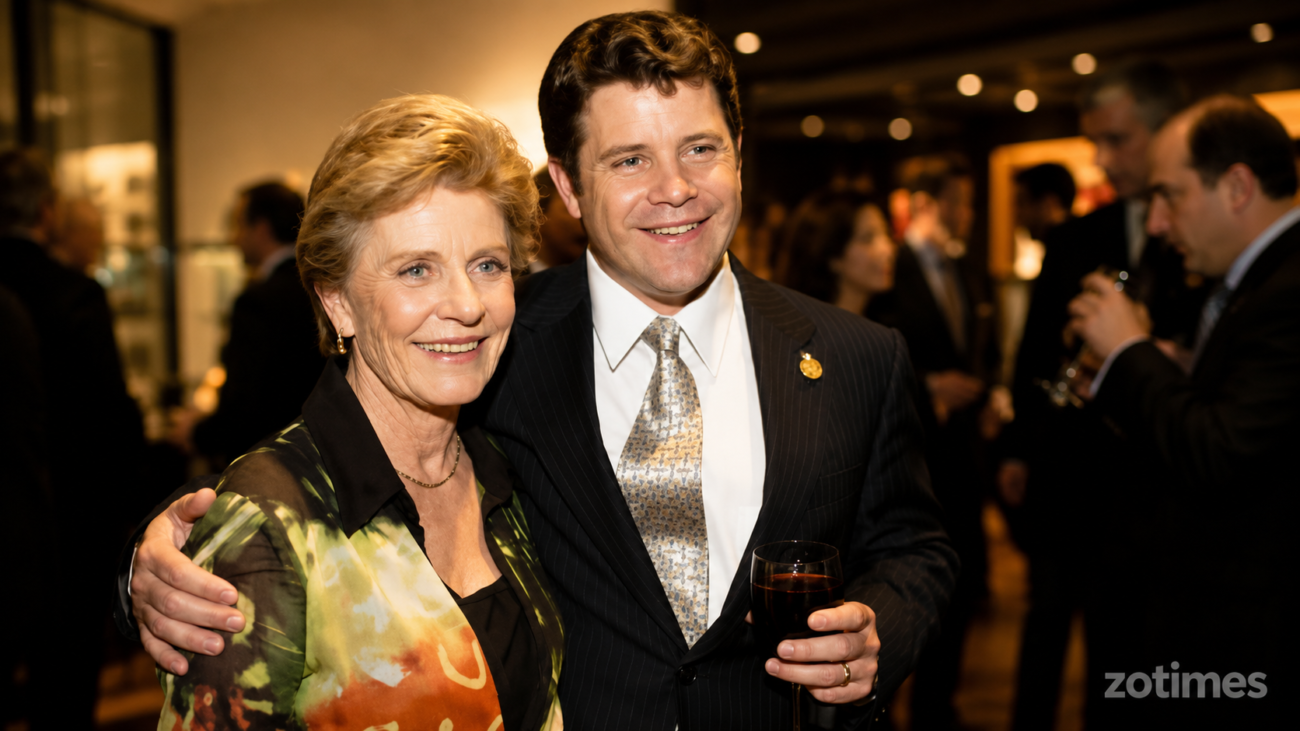
Michael Tell spent much of his life outside the celebrity machine, yet his name became attached to one of Hollywood’s most enduring family questions. To national readers, he is usually introduced as Patty Duke’s brief husband and Sean Astin’s biological father. In Las Vegas, where his public work actually unfolded, he was remembered as a concert promoter, newspaper man, and caretaker of the Las Vegas Israelite, the community paper founded by his father. His story is less a tale of fame than of proximity to fame, with one short marriage casting a long shadow over a private life.
Early Life and Family Background
Michael Tell was born on March 1, 1945, and died on April 6, 2025, according to a memorial published by the Las Vegas Israelite. He was the youngest of three sons born to Jack and Beatrice Tell, and he grew up in New York City before the family moved west. His father, Jack Tell, had worked as a photo editor at The New York Times, then pursued his own newspaper ambitions in Nevada. That move would shape Michael’s future far more deeply than his later brush with Hollywood did.
The Tell family’s move to Nevada was not glamorous. Michael later recalled that the family “came to Vegas broke,” after Jack’s attempt to run the Territorial Enterprise in Northern Nevada did not work out. Las Vegas was still a much smaller city then, with a population of about 90,000, and the Jewish community had not yet grown into the network of temples and institutions Tell would later know. Those years gave him a front-row view of a city inventing itself in public.
Coming of Age in Las Vegas
Tell was still a teenager when he began moving between journalism, show business, and the rough optimism of early Las Vegas. His father founded the Las Vegas Israelite in the mid-1960s, giving the family a place in local publishing. Michael’s own interests pointed first toward music, especially the youth culture that Las Vegas’s casino-centered entertainment industry did not always serve. He saw an opening where older promoters saw little reason to change.
As a young promoter, Tell started a teenage nightclub and persuaded major performers to play for young Las Vegans. He later said he approached Bobby Darin in jeans, admitted he had no money, and explained that teenagers in Las Vegas had nowhere to go. Darin performed for him without pay, and Tell said Wayne Newton played the next night. The weekend, by Tell’s account, brought in $10,000 and helped him buy groceries for his family.
The Rock Promoter Years
Before he became known in celebrity articles, Michael Tell was part of the effort to bring rock acts to Las Vegas. Between 1968 and 1972, he booked performers who might otherwise have skipped the city. The Las Vegas Review-Journal reported that those acts included Led Zeppelin, Black Sabbath, the Steve Miller Band, and The Doors. The Doors concert took place at the old Las Vegas Ice Palace, where the band reportedly played on plywood placed over ice.
Tell’s niece, Michele Tell, later said he helped change the musical direction of Las Vegas by bringing major rock acts to town when the city was not yet a natural stop for them. That description matters because Las Vegas entertainment in that period was still closely associated with lounge singers, casino showrooms, and old-school headliners. Tell’s work was younger, louder, and less polished around the edges. It connected him to a different audience and gave him a career before the world knew him through Patty Duke.
Tell later moved his concert-promotion work to Southern California. He said he became the fifth-largest concert promoter in the United States and claimed he helped launch the careers of Jimi Hendrix and José Feliciano. Those statements come from Tell’s own recollections, so they should be treated as part of his account rather than independently audited industry rankings. Still, local reporting and family records clearly support his standing as a serious promoter in the rock era.
Marriage to Patty Duke
Michael Tell’s best-known chapter began in 1970, when he married actress Patty Duke in Las Vegas. Duke was already famous: she had won an Academy Award as a child for The Miracle Worker and starred in The Patty Duke Show. Their wedding took place at the Little Church of the West on June 24, 1970, and the marriage lasted only 13 days before it was annulled. The brevity of the marriage made it a curiosity, but Duke’s pregnancy made it part of Hollywood lore.
The marriage has often been retold through the lens of Duke’s later openness about her mental health. People reported that Duke and Tell knew each other only briefly and that he had sublet her apartment before they eloped. Duke later described him as a “total stranger,” language that captures how sudden and unstable the union appeared in hindsight. A careful biography should not turn that period into gossip, because Duke’s life at the time was marked by real distress as well as celebrity attention.
Sean Astin and the Paternity Story
Sean Astin was born on February 25, 1971, months after Duke and Tell’s annulment. For years, the public story around his paternity was unsettled, partly because Duke had also been linked to Desi Arnaz Jr. and actor John Astin. John Astin married Duke in 1972, adopted Sean, and raised him as his son. That family bond remained central to Sean’s identity even after the biological question was answered.
People reported that Duke told Sean when he was 14 that Desi Arnaz Jr. was his biological father. Later, after a relative of Tell suggested a possible connection, Sean underwent DNA testing in 1994. The results showed that Michael Tell was his biological father. Sean later described the situation with unusual generosity, saying that John Astin was his father and Michael Tell was his biological father.
Tell and Sean did build a relationship after the DNA test. In local reporting after Tell’s death, Tell said he and Sean got along well, and he spoke proudly of Sean’s three daughters as his grandchildren. John Astin also spoke warmly about Tell, telling People that Sean’s biological father had turned out to be “a great guy.” The story could have become a contest over fatherhood, but the people closest to it often framed it more generously.
The Las Vegas Israelite and Community Work
After Jack Tell died, Michael Tell took over the Las Vegas Israelite in 1979. He served for decades as editor and publisher, keeping the paper focused on Jewish life in Southern Nevada. The publication covered community events, religious life, local concerns, and news of interest to Jewish readers. Tell once said he was “married to a newspaper,” a phrase that may describe his adult life better than any celebrity label does.
The Las Vegas Review-Journal described Tell as a proud Nevada newsman who carried on his father’s legacy. Shelley Berkley, a former Las Vegas mayor, said he had almost single-handedly kept the paper alive for decades so the Jewish community could have a publication that reflected its interests. Former Mayor Carolyn Goodman also praised the paper’s connection to the community and said Tell would be missed. Those tributes place him in a local civic story, not just a Hollywood footnote.
Tell’s work also tracked the growth of Jewish Las Vegas. In a 2018 oral history for UNLV’s Southern Nevada Jewish Heritage Project, he reflected that there had been one temple in 1973 and 28 by the time of the interview. He also spoke about antisemitic incidents in the city and how the community responded. His role was not only to publish announcements, but to help record how a community saw itself.
Marriage, Family, and Private Life
Later in life, Tell was survived by his wife, Nelcy Tell, according to the Las Vegas Review-Journal. He was also survived by his son Sean Astin, three grandchildren, his brother Jay Tell, and several nieces, including Michele Tell, Bonnie Lally, Robyn Reinhart, Jeni Davis, and Jackie Tell. His brother Donald Tell and his parents died before him. Public records and reporting do not support the kind of over-detailed private claims that often appear on celebrity biography sites.
Michele Tell’s memories give one of the warmer portraits of him. She called him “the coolest uncle” and described him as deeply spiritual, with what she called a “Zen attitude of life.” She recalled that he liked wearing suspenders and would tell her to “be like water and flow.” Those details matter because they show a person who was more than a name in another family’s story.
Money, Career Earnings, and Net Worth
There is no reliable public net worth figure for Michael Tell. Many low-quality celebrity sites assign estimates to private people, but those numbers are usually unsourced and should not be treated as fact. Tell’s known income sources came from concert promotion, newspaper publishing, and related local media work. None of those sources provides enough public financial detail to support a credible personal wealth estimate.
His career was not built around public stock holdings, major studio contracts, or high-profile executive compensation. The Las Vegas Israelite was a community newspaper, not a media empire, and Tell’s work appears to have been sustained more by commitment than by large-scale commercial power. That does not make his career small; it makes it local, practical, and hard to measure in celebrity-money terms. The most honest answer is that his net worth was not publicly verified.
Public Image and Why People Search His Name
People search Michael Tell because his name sits at the crossroads of three public stories. The first is Patty Duke’s life, including her fame, marriages, and later mental health advocacy. The second is Sean Astin’s family background, which continues to interest fans of The Goonies, Rudy, The Lord of the Rings, and Stranger Things. The third, less widely understood, is Las Vegas’s Jewish community history and Tell’s work as a publisher.
That mix can make Tell look more mysterious than he was. He was not a recluse in Las Vegas, where he appeared at community events and ran a public newspaper. He was private in the national sense because he did not pursue celebrity interviews or build a career around his connection to Duke and Astin. His public image is best understood as split between search-engine fame and local memory.
Death and Current Status
Michael Tell died on April 6, 2025, at age 80. The Las Vegas Israelite marked his death with a memorial notice and said the paper would briefly go dark in his honor before returning with a modern direction. The notice thanked readers and honored Jack, Bea, and Michael Tell together. That framing made clear that the newspaper was a family legacy, not simply a business he once ran.
A memorial service was scheduled at Bunkers Eden Vale Mortuary in Las Vegas. His family asked that people donate to a local temple of their choosing instead of sending flowers. The request fit the public record of Tell’s life, which stayed closely tied to Jewish Las Vegas. Even in death, the story returned to the community that had anchored him.
Frequently Asked Questions
Who was Michael Tell?
Michael Tell was an American concert promoter, newspaper publisher, and longtime editor of the Las Vegas Israelite. He is widely known as Patty Duke’s former husband and Sean Astin’s biological father. In Las Vegas, he was also remembered as a community figure who helped preserve a Jewish newspaper founded by his father.
Was Michael Tell Sean Astin’s biological father?
Yes, DNA testing in 1994 showed that Michael Tell was Sean Astin’s biological father. Sean was raised by John Astin, who adopted him after marrying Patty Duke in 1972. Sean has spoken with respect about all the father figures in his life, including John Astin, Michael Tell, Desi Arnaz Jr., and Michael Pearce.
How long was Michael Tell married to Patty Duke?
Michael Tell and Patty Duke were married for 13 days in 1970. Their wedding took place in Las Vegas at the Little Church of the West. The marriage was annulled, but it remained publicly discussed because Duke was pregnant with Sean Astin at the time.
What did Michael Tell do for a living?
Tell worked first as a concert promoter and later as editor and publisher of the Las Vegas Israelite. As a promoter, he helped bring rock acts to Las Vegas during a period when the city was better known for casino showroom entertainment. As a publisher, he carried on his father’s work and kept a Jewish community newspaper alive for decades.
Did Michael Tell have a relationship with Sean Astin?
Yes, public reporting indicates that Michael Tell and Sean Astin developed a relationship after DNA testing confirmed their biological connection. Tell said they got along well and referred to Sean’s three daughters as his grandchildren. Sean has also described his family story in a way that honors both biology and upbringing.
What was Michael Tell’s net worth?
Michael Tell’s net worth has not been credibly verified in public records or reliable reporting. Any exact number found on celebrity estimate sites should be treated with caution unless supported by clear sourcing. His known work included concert promotion and local newspaper publishing, but those roles do not provide enough public data for a trustworthy estimate.
When did Michael Tell die?
Michael Tell died on April 6, 2025, at age 80. The Las Vegas Israelite published a memorial notice listing his dates as March 1, 1945, to April 6, 2025. Local reporting remembered him as a concert promoter, newspaper publisher, father, grandfather, and longtime Las Vegas figure.
Read Also: Patricia Beech Biography: Tony Bennetts First Wife
Conclusion
Michael Tell’s life resists the easy version. He was part of a famous Hollywood paternity story, but he did not live as a Hollywood personality. The facts that survive most clearly show a young promoter with nerve, a son shaped by a newspaper family, and a publisher who stayed with a community paper long after the spotlight had moved elsewhere.
His connection to Patty Duke and Sean Astin will always be the reason many readers first encounter his name. That connection is real, and it deserves careful treatment because it affected real people, not characters in a scandal. Yet it should not erase the Las Vegas story that gave Tell his own public identity.
What remains is a quieter kind of legacy. Michael Tell helped bring rock music into a city still defining its entertainment future, then spent decades preserving a record of Jewish life in Southern Nevada. For a man often reduced to one biographical footnote, that fuller record is the more interesting story.
