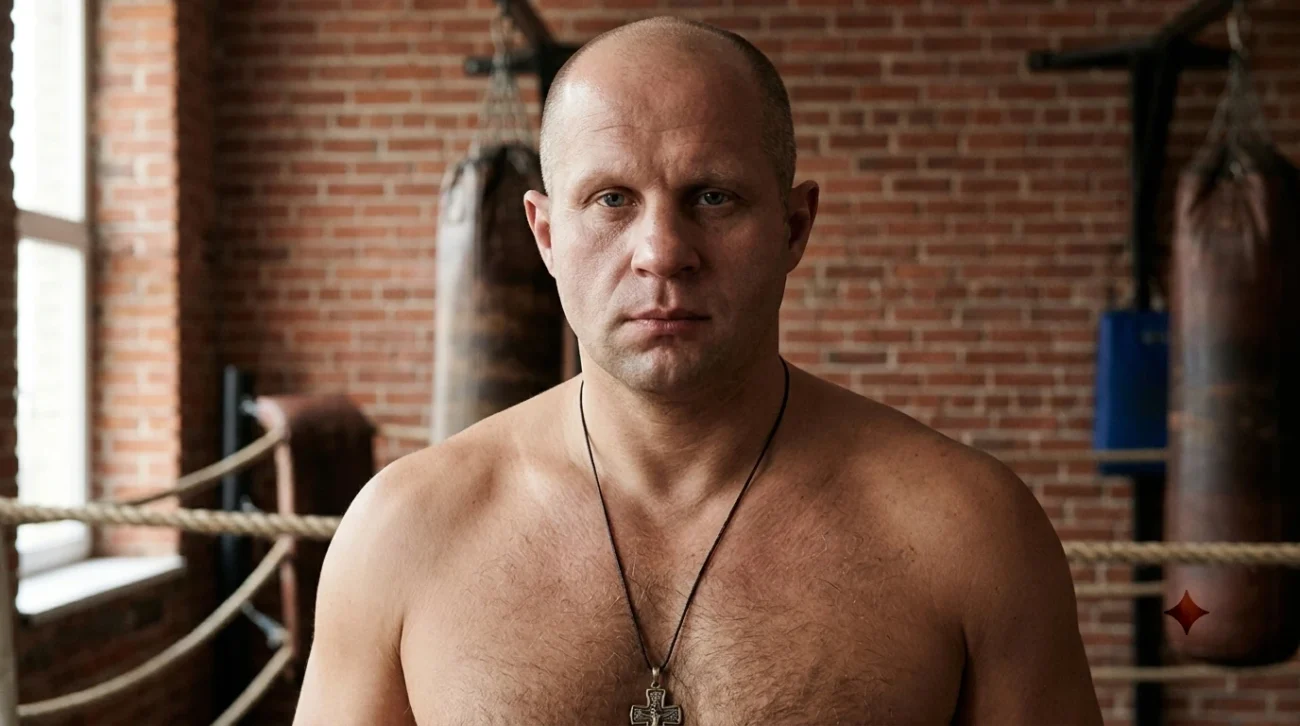
Fedor Emelianenko became one of the rare fighters whose reputation grew beyond a single promotion, country, or title belt. Known worldwide as “The Last Emperor,” he built his name through a quiet public manner and a violent, highly skilled fighting style that made him the defining heavyweight of the PRIDE era. For many MMA fans, the name emelianenko means Fedor first: the Russian combat sambo master who ruled heavyweight mixed martial arts for much of the 2000s and retired as one of the most respected fighters the sport has produced.
Early Life and Background
Fedor Vladimirovich Emelianenko was born on September 28, 1976, in Rubizhne, then part of the Ukrainian SSR in the Soviet Union. He later became closely tied to Stary Oskol, Russia, the city often listed as his hometown during his fighting career. His upbringing was shaped by the late Soviet and post-Soviet years, a period that produced many disciplined combat athletes from Eastern Europe.
Fedor came from a family that later became known in combat sports circles, especially because his younger brother Alexander Emelianenko also became a professional heavyweight fighter. Unlike many athletes who build public fame through a large media personality, Fedor’s image was almost the opposite. He was reserved, plain-spoken, and rarely theatrical, which made his calmness before and after fights part of his appeal.
Training in Judo and Sambo
Emelianenko’s fighting foundation came from judo and sambo, especially combat sambo. These sports shaped the way he moved in MMA. He was not simply a puncher or wrestler; he could strike, clinch, throw, scramble, submit opponents, and attack from top position with fast ground-and-pound.
Combat sambo gave him a natural bridge into mixed martial arts because it already combines grappling, throws, submissions, and striking. His judo training helped with balance and timing, while sambo gave him a practical, fight-ready skill set. That base made him dangerous in every phase of a fight long before “complete fighter” became a common MMA label.
Early MMA Career
Fedor began his professional MMA career in 2000. His early fights came before the sport had one clear global center, and he built experience across different organizations and rulesets. Those early years were important because they prepared him for the international stage in Japan, where heavyweight MMA was booming.
Before he became a global name, Emelianenko showed the traits that later defined him. He fought with patience but could explode suddenly. He did not look like the tallest or most muscular heavyweight, yet he had rare speed, balance, and composure for the division.
PRIDE and the Career Breakthrough
Fedor’s true breakthrough came in PRIDE Fighting Championships, the Japanese promotion that hosted many of the world’s best heavyweights in the early 2000s. PRIDE gave him the stage and opponents that turned him from a rising Russian fighter into an MMA legend. His wins over Semmy Schilt and Heath Herring helped establish him as a serious contender.
The defining step came in 2003 when he defeated Antônio Rodrigo Nogueira to win the PRIDE heavyweight championship. Nogueira was widely regarded as the best heavyweight in the world at that time, known for his toughness and elite Brazilian jiu-jitsu. Fedor’s victory showed that he could beat the division’s technical standard-bearer not by avoiding danger, but by controlling it.
The Cro Cop Fight and Peak Years
One of Fedor’s most famous victories came against Mirko “Cro Cop” Filipović in 2005. Cro Cop was one of the most feared strikers in the sport, known for his left high kick and kickboxing power. Fedor fought him with pressure, discipline, and confidence, winning by decision in a bout many fans still view as one of the best heavyweight fights in MMA history.
That fight captured the peak version of Emelianenko. He could strike with dangerous opponents, grapple with submission experts, and stay calm under heavy pressure. During this period, he carried an aura that few fighters ever achieve: opponents knew what he could do, yet they often could not stop it.
Why Fedor Never Fought in the UFC
One major question has followed Emelianenko for years: why did he never fight in the UFC? The answer appears to be tied mostly to business negotiations rather than a lack of interest. The UFC wanted him at different points, but talks involving contracts, control, and co-promotion with M-1 Global never led to a deal.
That absence still affects how people discuss his legacy. Some fans argue that not fighting in the UFC leaves unanswered questions. Others say his record in PRIDE and other major organizations is strong enough because he beat many elite heavyweights from his era. Both views exist because his career happened during a time when MMA talent was spread across several major promotions.
Setbacks and Later Career
Fedor’s long unbeaten run ended in 2010 when Fabricio Werdum submitted him in Strikeforce. The loss shocked the MMA world, not because Werdum lacked skill, but because Fedor had seemed almost unbeatable for so long. Losses to Antônio “Bigfoot” Silva and Dan Henderson followed, making it clear that his prime had passed.
After a first retirement in 2012, Emelianenko later returned to fighting and eventually competed in Bellator. His late career included wins over names such as Frank Mir, Chael Sonnen, Quinton “Rampage” Jackson, and Timothy Johnson. It also included losses that showed the cost of age in heavyweight MMA, especially against powerful and younger opponents.
Final Fight and Retirement
Fedor’s final MMA fight took place on February 4, 2023, at Bellator 290 against Ryan Bader. Bader stopped him in the first round, ending Emelianenko’s final attempt to win the Bellator heavyweight title. After the fight, Fedor retired from mixed martial arts.
The ending was not a perfect storybook finish, but it was treated with respect by the MMA community. Many fighters and fans saw the night as a farewell to one of the sport’s great heavyweights. His final record is widely listed as 40 wins, 7 losses, and 1 no contest.
Marriage, Children, and Private Life
Fedor Emelianenko has kept much of his private life away from public attention. He has been married, and he is publicly known to have children, but he has usually avoided turning his family life into a media subject. Some personal details reported online can be inconsistent, so private family information should be handled carefully unless confirmed by reliable public sources.
This privacy fits the image Fedor has carried through most of his career. He did not build fame through constant public exposure. He built it through performance, discipline, and the respect he earned from opponents and fans.
Net Worth and Income Sources
Fedor Emelianenko’s exact net worth is not publicly confirmed. Online estimates vary, but many do not show reliable calculations or verified financial records. His income likely came from fight purses, sponsorships, appearances, promotional work, business connections, and combat sports roles.
Disclosed fight earnings do not show the full financial picture for a fighter like Fedor. International contracts, sponsorship deals, bonuses, taxes, management fees, and private agreements are often not public. For that reason, any precise net worth figure should be treated as an estimate rather than a confirmed fact.
Public Image and Reputation
Fedor’s public image is built on restraint. He rarely looked emotional before fights and rarely celebrated in a loud way after them. That calm made him stand out in a sport filled with trash talk, promotion, and intense public rivalries.
His reputation among many fighters is unusually strong. Even critics who question parts of his résumé usually acknowledge his skill, influence, and dominance during his prime. For fans of early global MMA, he remains one of the central figures of the sport’s growth outside the UFC.
Recent Updates and Current Status
Since retiring from MMA in 2023, Emelianenko has remained connected to combat sports. He has appeared around major fight events and continues to be treated as a respected figure in MMA and sambo circles. Reports in 2026 indicated that he was considering a possible sambo competition in 2027 after turning 50, but that should not be confused with a confirmed MMA comeback.
As of now, Fedor is best described as retired from professional MMA. His legacy is active, but his fighting career appears complete unless he chooses a limited return in another combat sport format. His place in heavyweight history is already secure.
Frequently Asked Questions
Who is Emelianenko?
Emelianenko usually refers to Fedor Emelianenko, the Russian former heavyweight MMA fighter known as “The Last Emperor.” He is best known for his PRIDE heavyweight title reign and his status as one of the greatest heavyweights in MMA history.
What is Fedor Emelianenko’s age?
Fedor Emelianenko was born on September 28, 1976. As of 2026, he is 49 years old and will turn 50 in September 2026.
What is Fedor Emelianenko’s MMA record?
His professional MMA record is widely listed as 40 wins, 7 losses, and 1 no contest. His final fight was a loss to Ryan Bader at Bellator 290 in February 2023.
Why is Fedor Emelianenko called The Last Emperor?
“The Last Emperor” became Fedor’s famous nickname during his fighting career. It fit his image as a calm, dominant heavyweight champion who carried himself with unusual restraint and authority.
Did Fedor Emelianenko fight in the UFC?
No, Fedor never fought in the UFC. Negotiations happened at different times, but business issues and promotional disagreements prevented a deal.
Is Fedor Emelianenko married?
Fedor has been married, but he keeps his private life guarded. Details about his relationships and family should be treated carefully because not every claim online is publicly confirmed.
What is Fedor Emelianenko doing now?
Fedor is retired from MMA and remains connected to combat sports. He has appeared at events and has been linked to a possible future sambo appearance, but there is no confirmed professional MMA return.
Read Also: Antonio Chi Su: The Untold Story of Lyn May’s Husband
Conclusion
Fedor Emelianenko’s story matters because it belongs to a different era of mixed martial arts. He became a legend before the UFC fully became the sport’s global center, and his greatness was built across Japan, Russia, and international promotions rather than inside one cage.
His career had flaws, unanswered questions, and a late decline, as most long fighting careers do. But those facts do not erase the years when he was the heavyweight standard. At his best, he combined calm, speed, power, grappling, and fight intelligence in a way few heavyweights have matched.
The name emelianenko still carries weight because it represents more than wins and losses. It represents a fighter whose quiet presence became louder than most trash talk, and whose influence remains part of how MMA remembers its heavyweight history.
