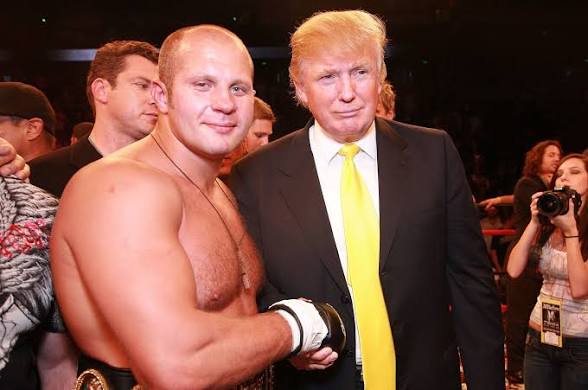
Fedor Emelianenko became one of mixed martial arts’ most enduring figures without the noise that usually follows combat-sports fame. Known as “The Last Emperor,” he built his reputation through calm, discipline, and a long heavyweight run that made him a standard by which other fighters are still measured. For readers searching “emelianenko,” the person most often meant is Fedor Vladimirovich Emelianenko, the Russian MMA heavyweight, combat sambo champion, and former PRIDE heavyweight champion whose career helped define an earlier era of the sport.
Born on September 28, 1976, in Rubizhne, then part of the Ukrainian Soviet Socialist Republic, Fedor grew up in Stary Oskol, Russia. He became known internationally as a Russian athlete and represented Russia throughout his combat-sports career. His public story is not only about victories and titles. It is also about how a reserved fighter from a sambo and judo background became a global symbol of heavyweight excellence before MMA became centered around the UFC.
Early Life and Family
Fedor Vladimirovich Emelianenko was born into a working-class family during the Soviet period. Public accounts of his childhood place his upbringing in Stary Oskol, a city in western Russia that became closely tied to his identity. Unlike many later MMA stars, he did not build his profile through celebrity culture or public self-promotion. His image developed around training, competition, restraint, and a serious personal manner.
Fedor is the most famous member of the Emelianenko family, but he is not the only one connected to combat sports. His brother Alexander Emelianenko also fought professionally as a heavyweight and competed in major promotions, including PRIDE. Another brother, Ivan Emelianenko, has been connected to fight coverage on a much smaller scale. The brothers’ public records are very different, and Fedor’s athletic legacy should not be confused with the later controversies attached to other family members.
Family life has often been handled carefully by Fedor in public. He has been married and has children, but he has not made his private life the center of his public identity. Details about his children and household are not as heavily publicized as his fight career, and some personal information is best treated as private unless directly confirmed by reliable public records or Fedor himself.
Training, Sambo, and First Ambitions
Fedor’s foundation was built in judo and sambo, two disciplines that shaped the way he fought. Sambo, developed in the Soviet Union, combines throws, control, submissions, and in its combat form, striking. For Fedor, this background gave him a style that moved smoothly between standing exchanges, clinches, takedowns, and ground attacks. He never looked like a fighter adding grappling as a late-career tool; grappling was part of his athletic language from the start.
Before his MMA fame, he became a highly accomplished combat sambo competitor. He is widely recognized as a multiple-time world champion in combat sambo and a decorated Russian national competitor. Those titles matter because they explain why his MMA approach was so complete for a heavyweight of his era. He could punch, throw, reverse, submit, and scramble without needing a fight to stay in one phase.
His early ambitions were rooted in sport rather than entertainment. Fedor’s public persona remained unusually modest even when he became famous in Japan and later in the United States. He did not rely on trash talk, costume, or rivalry to sell fights. That quietness became part of the attraction: he seemed least dramatic before doing the most dangerous work.
Early MMA Career
Fedor made his professional MMA debut in 2000, entering the sport at a time when it was far less standardized than it is now. Weight classes, rules, production styles, and training systems varied widely across organizations. Heavyweights often came from single-discipline backgrounds, and many fights were built around style clashes rather than the more blended MMA approach common today.
He first gained experience in RINGS before moving to PRIDE Fighting Championships in Japan. His early career included one official loss by doctor stoppage due to a cut against Tsuyoshi Kohsaka in December 2000, a result that fans still discuss because of the unusual circumstances. After that, he began a long unbeaten stretch that became the foundation of his legend. From 2001 through much of the next decade, he was the heavyweight other fighters were measured against.
What made Fedor stand out was not only that he won. It was that he won against very different kinds of threats. He faced wrestlers, submission specialists, kickboxers, larger heavyweights, and former champions. His fights often looked dangerous in the opening moments, but he had a rare ability to turn disorder into control.
PRIDE and Career Breakthrough
Fedor’s breakthrough came in PRIDE, the Japanese promotion that was one of MMA’s leading stages in the early 2000s. At that time, PRIDE was not a side route or a lesser platform. It had elite heavyweights, major live audiences, and a style of presentation that made fighters feel like global sports figures. Fedor became one of its defining champions.
His March 2003 win over Antônio Rodrigo Nogueira was the career-changing moment. Nogueira was one of the most respected heavyweights in the world and a master of submissions from the guard. Fedor defeated him by unanimous decision, spending significant time in positions where Nogueira was usually most dangerous. That victory showed that Fedor could beat an elite specialist not by avoiding danger, but by managing it better than anyone expected.
The years that followed deepened his reputation. He beat major names such as Mark Coleman, Kevin Randleman, Mirko Cro Cop, Tim Sylvia, and Andrei Arlovski. His 2005 win over Cro Cop remains one of the most important heavyweight fights in MMA history because it matched Fedor against one of the era’s most feared strikers. Fedor pressured him, absorbed the risk, and won a decision that strengthened his claim as the world’s top heavyweight.
Fighting Style and Public Image
Fedor’s fighting style was built on pressure, balance, and fast decision-making. On the feet, he often threw wide, forceful punches that could look loose by boxing standards but worked in MMA because they helped him close distance. Once close, he could clinch, throw, trip, or force scrambles. That made opponents react to several dangers at once.
On the ground, he used heavy top pressure and sudden attacks rather than long, slow control. His ground-and-pound was fast and punishing, but he was also dangerous with submissions. He did not need a perfect position for long. He needed only a moment of weakness, and heavyweight fights often turn on moments.
His public image was just as distinct. Fedor rarely seemed emotional before or after fights. He was respectful, soft-spoken, and often described as deeply disciplined. That contrast between calm personality and violent efficiency gave him an aura that promotional language alone could not create.
The UFC Question
One of the defining facts of Fedor’s career is that he never fought in the UFC. For many fans, that remains the main argument against calling him the greatest MMA fighter ever. For others, it is an unfair modern standard applied to an earlier era, when PRIDE had many of the world’s best heavyweights.
The truth sits between those positions. Fedor’s prime competition was real, and PRIDE was a top-level organization during his best years. At the same time, the failed UFC negotiations left several major fantasy matchups unanswered. Fans never got to see him against Randy Couture, Brock Lesnar, Cain Velasquez, Junior dos Santos, or other UFC heavyweight champions in their proper windows.
Public discussion of those negotiations has included claims about money, co-promotion, management demands, and contractual control. The full private record has not been publicly confirmed. What can be said safely is that no agreement was reached, and the absence became part of Fedor’s story. His career is both historically rich and permanently marked by the fights that never happened.
Setbacks, Decline, and Comeback Years
Fedor’s long aura of invincibility ended in 2010 when Fabricio Werdum submitted him in Strikeforce. Werdum was an elite grappler and later became UFC heavyweight champion, so the loss was not to a minor opponent. Still, the result shocked fans because Fedor had gone so long without a clear defeat in elite competition.
More losses followed against Antonio “Bigfoot” Silva and Dan Henderson. Those fights marked the first clear decline of Fedor’s career. His timing, durability, and ability to recover from danger no longer looked the same. In heavyweight MMA, even a slight drop can be costly because one exchange can change everything.
Fedor initially retired in 2012 after beating Pedro Rizzo, then returned to competition in 2015. His later years included wins, losses, and continued global interest. He was no longer the same fighter who ruled PRIDE, but his name still meant enough to headline major events. That late chapter showed both the lasting power of his reputation and the physical cost of staying too long in a dangerous sport.
Bellator and Final Retirement
Fedor’s final major MMA chapter came in Bellator. He fought well-known opponents including Matt Mitrione, Frank Mir, Chael Sonnen, Ryan Bader, Quinton “Rampage” Jackson, and Timothy Johnson. The results were mixed, as expected for a heavyweight competing into his 40s.
His final fight took place on February 4, 2023, at Bellator 290 in Inglewood, California. He faced Ryan Bader for the Bellator heavyweight title and lost by first-round TKO. After the bout, Fedor retired from professional MMA, closing a career officially listed at 40 wins, 7 losses, and 1 no contest.
The ending was not a storybook victory, but combat sports rarely gives its legends clean exits. Fedor’s final years did not erase his prime. They placed it in sharper relief. The fighter who retired in 2023 was older and slower, but the memory that keeps his name alive comes from the years when he seemed able to solve every kind of heavyweight problem.
Marriage, Children, and Private Life
Fedor has been married and is known to have children, but he has usually kept family matters away from the center of his public career. Publicly available information confirms that family and faith have mattered to his identity, but many personal details remain private. That privacy is part of how he has handled fame.
He has been associated with Russian Orthodox Christianity and has often presented himself as disciplined, traditional, and reserved. Unlike some combat-sports stars, he did not make personal drama a marketing tool. His public appeal came from the gap between his quiet manner and his extreme effectiveness in the ring or cage.
Reports about his relationships and children vary in detail across public sources, so the safest approach is not to overstate private facts. His career is extensively documented. His household life is less public, and that boundary deserves respect.
Net Worth and Income Sources
Fedor Emelianenko’s exact net worth is not publicly confirmed. Online estimates exist, but they should be treated cautiously because they often rely on unclear methods and may not account for taxes, management fees, currency differences, private investments, or post-career income. A precise figure would be misleading without verified financial records.
His known income sources likely included fight purses, bonuses, sponsorships, promotional appearances, coaching or team activity, and combat-sports-related roles. His highest-visibility earning years came during his PRIDE, Strikeforce, and Bellator periods. He also carried strong name value in Japan, Russia, and among international MMA fans.
Unlike some modern UFC stars, Fedor’s prime occurred before social media, pay-per-view branding, and personal-content businesses became major athlete revenue streams. That makes direct financial comparison with current fighters difficult. His fame was huge within the sport, but his earning structure belonged to a different MMA economy.
Recent Work and Current Status
As of 2026, Fedor Emelianenko is retired from professional MMA. His last confirmed professional fight remains the February 2023 loss to Ryan Bader. There has been occasional discussion around possible appearances, grappling, sambo, coaching, or combat-sports events, but no professional MMA comeback should be treated as confirmed unless announced officially.
Fedor has also remained connected to Russian combat sports through team and development circles. Fighters associated with his camp, including names such as Vadim Nemkov and Valentin Moldavsky, helped extend his influence beyond his own fighting career. That coaching and team identity matter because they show that his impact did not end when he stopped competing.
His legacy remains most alive in debates over the greatest heavyweight in MMA history. Some fans rank him first without hesitation. Others weigh his lack of UFC fights against him. The fairest view is that Fedor is one of the essential figures in MMA history, and any serious account of heavyweight greatness has to include him.
Frequently Asked Questions
Who is Emelianenko?
Emelianenko usually refers to Fedor Emelianenko, a Russian former mixed martial artist and combat sambo champion. He is best known as “The Last Emperor” and became famous for his heavyweight run in PRIDE Fighting Championships.
The surname can also refer to his brothers Alexander and Ivan, who have also been connected to combat sports. Fedor is by far the most internationally significant athlete attached to the name.
How old is Fedor Emelianenko?
Fedor Emelianenko was born on September 28, 1976. As of June 2026, he is 49 years old.
His age matters in understanding his career arc. His peak came in the 2000s, while his final professional MMA fight took place in 2023, when he was well past the usual prime years for a heavyweight fighter.
What is Fedor Emelianenko famous for?
Fedor is famous for being one of the greatest heavyweight MMA fighters ever. He became PRIDE heavyweight champion and built a long unbeaten run against major opponents from different fighting backgrounds.
He is also known for his calm public image. Fans often remember the contrast between his reserved personality and his aggressive, highly effective fighting style.
Did Fedor Emelianenko ever fight in the UFC?
No, Fedor Emelianenko never fought in the UFC. Negotiations happened at different points, but no deal was completed.
That fact remains one of the most debated parts of his career. Supporters point to the strength of PRIDE’s heavyweight division during his prime, while critics say the missing UFC chapter leaves unanswered questions.
Is Fedor Emelianenko married?
Fedor has been married, and he is known to have children. He has generally kept his family life private and has not built his public identity around personal exposure.
Because some details about his relationships and household are not consistently confirmed in public sources, they should be handled carefully. His professional career is much more clearly documented than his private life.
What is Fedor Emelianenko’s net worth?
Fedor Emelianenko’s exact net worth is not publicly confirmed. Various online estimates exist, but they should not be treated as verified financial facts.
His income has likely come from fight purses, sponsorships, appearances, team activity, and combat-sports-related work. Without public financial records, any exact number would be speculative.
What is Fedor Emelianenko doing now?
Fedor is retired from professional MMA. His last fight was against Ryan Bader at Bellator 290 on February 4, 2023.
He remains an important figure in combat sports through his legacy, team connections, and influence on Russian MMA. No professional MMA return has been publicly confirmed as of 2026.
Read Also: Antonio Chi Su: The Untold Story of Lyn May’s Husband
Conclusion
Fedor Emelianenko’s story matters because it belongs to a version of MMA that no longer exists in the same form. He became great before the sport was fully centralized, before every major fighter was judged through the same promotional lens, and before fame required constant public performance.
His career was built on skill, composure, and unusual consistency in the most unstable weight class in the sport. The losses at the end are part of the record, but they do not define the best of him. His prime remains one of heavyweight MMA’s clearest examples of dominance across styles.
The Emelianenko name carries more than one story, and not all of them are celebratory. But Fedor’s place is secure: a quiet champion, a feared competitor, and a fighter whose career still forces fans to ask how greatness should be measured.
For readers trying to understand MMA history, Emelianenko is not just a name from old highlight reels. He is one of the figures who explains how the sport became global, why eras are hard to compare, and why the idea of the greatest heavyweight still begins, for many people, with Fedor.
