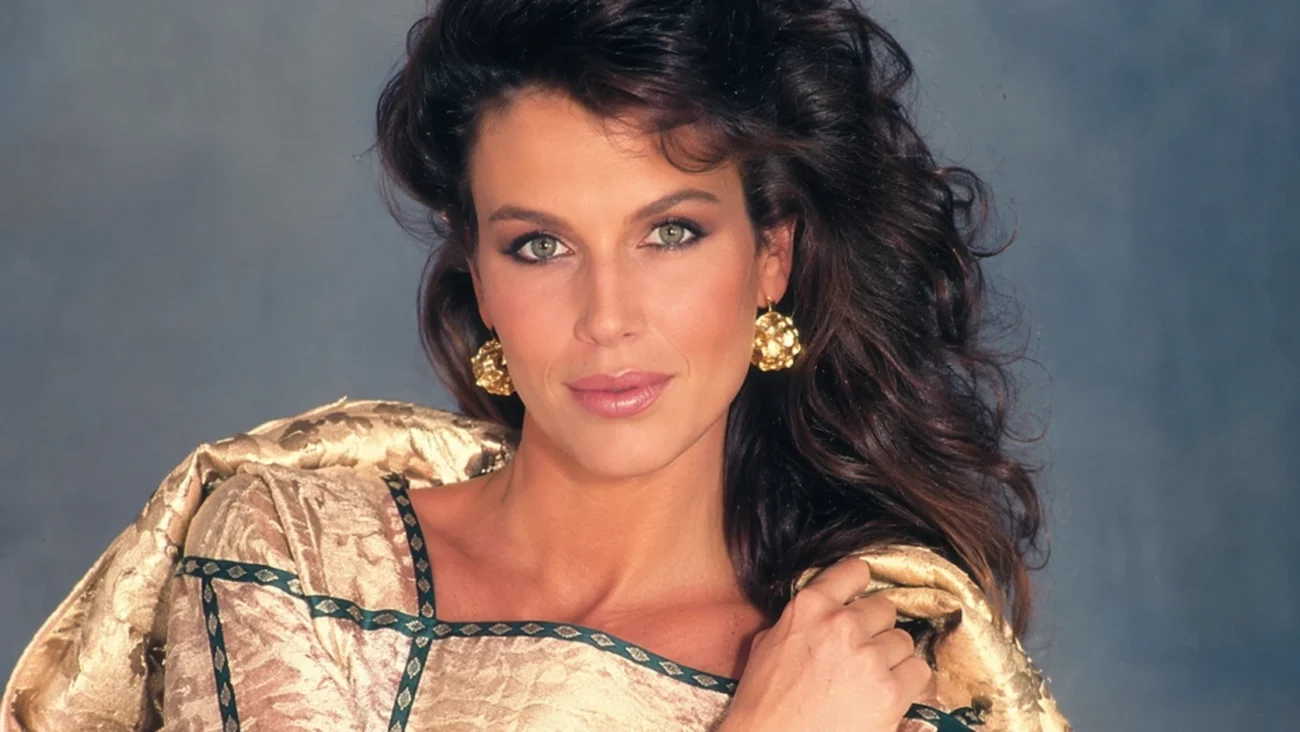
The name Valerie C. Robinson has circulated online for years, often attached to fragments of Hollywood history, quiet personal stories, and more recently, creative work in photography and documentary film. But here’s where it gets interesting: the search results don’t point to a single, fully documented public figure. Instead, they trace overlapping identities—one tied to a brief acting career in the late 1970s and 1980s, and another connected to contemporary visual storytelling.
For readers trying to piece together who Valerie C. Robinson is, the answer isn’t as simple as a standard celebrity biography. There are verified credits, widely repeated claims, and long stretches of private life that remain largely out of public view. What emerges, when the available record is carefully sorted, is the outline of a woman who moved through the edges of Hollywood, stepped away from it, and later appeared in a different creative context.
This is not a story built on constant headlines. It’s a story shaped by what can be confirmed, what remains uncertain, and how a name can carry more than one narrative at once.
Early Life and Background
Publicly verified details about Valerie C. Robinson’s early life are limited, and that scarcity has shaped how her biography is told. Unlike many actors of her era, she did not maintain a long public career or a steady media presence, which means fewer interviews, fewer profiles, and fewer firsthand accounts. As a result, much of her early background remains outside the public record.
Some online sources attempt to fill those gaps with specific claims about her birthplace, upbringing, or family history. But the truth is, many of those details cannot be traced back to reliable, primary documentation. That said, her later work in television and film suggests she was active in the United States entertainment industry by the late 1970s, which places her formative years in the preceding decades.
Not many people know this, but actors working in that period often moved through regional theater, small television roles, or modeling work before appearing in credited productions. While there is no widely documented record of Robinson’s training or early ambitions, her entry into network television indicates some level of professional preparation and industry access.
A Brief but Documented Acting Career
Valerie C. Robinson’s most concrete public footprint comes from her acting credits, which appear in late 1970s and 1980s productions. In some cases, she is credited under the name Valerie Carpenter Bernstein, which has led to ongoing discussion about whether the two names refer to the same person. The overlap in credits strongly suggests a connection, though the exact reason for the name variation is not publicly explained.
Her early work includes a role in Having Babies II, a television film released in 1977. That project was part of a wave of network TV dramas that explored domestic and social themes, often featuring ensemble casts. For a young performer, landing such a role typically meant navigating a competitive casting environment.
She later appeared in One Shoe Makes It Murder (1982), another television production that added to her screen presence during that period. While not a breakout role, it placed her within the working ecosystem of actors who sustained careers through guest appearances and supporting parts.
Her film credits include Over the Brooklyn Bridge (1984), a romantic comedy set in New York, and Patty Hearst (1988), a more serious film directed by Paul Schrader. These roles, though not headline-making, placed her within projects that had wider theatrical exposure. The range between light comedy and historical drama suggests a performer willing to move across genres.
But here’s the thing: after the late 1980s, her screen credits appear to stop. There is no widely documented continuation of her acting career into the 1990s or beyond. That absence raises the kind of question often asked about performers of that era—what happened next?
The Question of Identity and Name Variations
One of the most persistent issues surrounding Valerie C. Robinson is the question of identity. The name appears in connection with different credits, and in some cases, different professions. The link to Valerie Carpenter Bernstein is especially significant because it anchors Robinson’s presence in verifiable IMDb listings.
Name changes in the entertainment industry are not unusual. Actors may use different names for personal, professional, or contractual reasons. In Robinson’s case, the available evidence suggests that the two names are connected through shared film and television credits, though there is no widely published explanation confirming the relationship.
There’s a catch, though. Online biographies often present this connection as settled fact without citing sources. A careful reading of available records shows strong overlap, but it also highlights the need for caution when presenting identity claims as absolute.
This ambiguity is part of what makes Robinson’s story different from that of more widely documented public figures. It requires readers—and writers—to separate what is confirmed from what is inferred.
Personal Life and the Michael Schoeffling Connection
For many readers, interest in Valerie C. Robinson begins with her reported connection to actor Michael Schoeffling, best known for his role as Jake Ryan in Sixteen Candles (1984). Schoeffling himself stepped away from acting in the early 1990s, later working as a woodworker and living a largely private life.
Numerous online sources identify Robinson as his wife, with a marriage often dated to the late 1980s. The couple is also said to have children, including a daughter who has pursued modeling. These claims appear widely across celebrity-focused websites and biographical aggregators.
The truth is, however, that publicly verified documentation of these details is limited. Schoeffling’s retreat from public life means there are few recent interviews or official statements that confirm family details in a clear, primary-source way. As a result, much of what is written about Robinson’s personal life relies on repeated reporting rather than direct evidence.
That said, the consistency of these reports across multiple sources suggests there is likely a factual basis to the marriage. Still, responsible reporting requires acknowledging the limits of what can be confirmed. Robinson, like Schoeffling, appears to have chosen a life away from sustained public attention.
Stepping Away from Hollywood
The disappearance of Valerie C. Robinson from acting credits after the 1980s fits a broader pattern seen among many performers of that era. Not every actor seeks a lifelong career in front of the camera. Some step away for personal reasons, family life, or new professional paths.
In Robinson’s case, there is no widely documented explanation for her departure from acting. There are no farewell interviews or public statements marking the transition. Instead, her absence is marked by silence—no new credits, no ongoing publicity, and no visible return to the industry in later decades.
That silence has, in some ways, shaped her public image. Rather than being defined by a long list of roles, she is remembered through a handful of appearances and her connection to a better-known figure. It’s a reminder of how the entertainment industry often preserves some careers in detail while leaving others only partially recorded.
A Contemporary Creative Presence
In more recent years, the name Valerie C. Robinson has appeared in connection with photography and documentary filmmaking. An official website bearing that name presents her as a Washington, D.C.-area artist working across visual media, including a documentary project titled All the Things They Couldn’t.
This raises an important question: is this the same Valerie C. Robinson who appeared in 1980s film and television, or a different individual with the same name?
Here’s where it gets interesting again. The available public information does not definitively confirm that these identities are the same person. However, the overlap in name and the presence of an IMDb listing for the documentary project suggest at least the possibility of continuity.
The documentary work itself focuses on themes of identity, performance, and lived experience, particularly within dance communities. It reflects a shift from acting in scripted roles to shaping narratives behind the camera. If the connection holds, it would represent a significant evolution in creative direction.
Still, without direct confirmation, it remains important to present these details with care. The presence of a shared name alone is not enough to establish identity beyond doubt.
Public Visibility and Privacy
One of the defining features of Valerie C. Robinson’s story is the balance between public presence and private life. Her acting work placed her in the public eye, but only briefly. After that, she appears to have chosen a path that kept her largely out of the spotlight.
This choice stands in contrast to the modern expectation that public figures maintain a constant online presence. Robinson’s relative absence from interviews, social media, and promotional cycles has left much of her life undocumented in mainstream sources.
But here’s the thing: that absence is not unusual for performers of her era. Before the rise of digital media, it was entirely possible for actors to step away from the industry and build private lives without ongoing public scrutiny. Robinson’s story fits within that earlier pattern.
It also explains why so many online profiles rely on repeated claims rather than new reporting. Without fresh interviews or direct statements, writers often recycle what is already in circulation.
Financial Life and Net Worth
Like many figures with limited public documentation, Valerie C. Robinson’s financial details are frequently discussed but rarely confirmed. Various websites provide estimates of her net worth, often linking it to her acting career or her reported marriage.
The numbers vary widely, and there is little evidence to support any specific figure. Without verified financial disclosures, contract records, or business filings, these estimates should be treated as speculative.
What can be said with more confidence is that her acting roles, while professionally significant, were not the kind typically associated with large, long-term earnings. If she did build financial stability, it likely came from a combination of personal decisions, family life, and work outside the public eye.
Recent Years and Current Status
As of the mid-2020s, there are no widely reported public appearances or major interviews that offer a clear update on Valerie C. Robinson’s current life. If she is connected to the contemporary filmmaker of the same name, then her work continues in a creative capacity.
If not, then her current status remains largely private, consistent with the pattern of the past several decades. In either case, she represents a kind of public figure who exists partly in record and partly in absence.
That absence has not diminished interest in her name. Instead, it has fueled curiosity, especially as new generations discover older films and revisit actors connected to them.
Frequently Asked Questions
FAQ
Who is Valerie C. Robinson?
Valerie C. Robinson is known for her acting roles in late 1970s and 1980s film and television projects, including Having Babies II, One Shoe Makes It Murder, Over the Brooklyn Bridge, and Patty Hearst. She is also widely reported to be connected to actor Michael Schoeffling. In recent years, the name has also appeared in connection with photography and documentary filmmaking, though the exact identity link is not fully confirmed.
Is Valerie C. Robinson married to Michael Schoeffling?
Many online sources state that Valerie C. Robinson is the wife of Michael Schoeffling, best known for Sixteen Candles. These reports are consistent across multiple sites, but direct confirmation from primary sources is limited. Schoeffling himself has maintained a private life for decades, which makes detailed public verification difficult.
What movies and TV shows did Valerie C. Robinson appear in?
Her known credits include Having Babies II (1977), One Shoe Makes It Murder (1982), Over the Brooklyn Bridge (1984), and Patty Hearst (1988). Some of these roles are listed under the name Valerie Carpenter Bernstein, which is believed to be associated with her acting work. These credits form the most verifiable part of her public record.
Is Valerie C. Robinson the same person as Valerie Carpenter Bernstein?
The two names appear linked through shared film and television credits, suggesting they may refer to the same individual. However, there is no widely published statement confirming this connection directly. The overlap is strong enough to be noted, but it should be presented with caution.
What does Valerie C. Robinson do now?
There is no single confirmed answer. Some sources suggest she lives a private life away from public attention, possibly with her family. Others point to a Valerie C. Robinson working in photography and documentary filmmaking, though it is not definitively confirmed that this is the same person.
Read also: Helena Schneider: Life, Marriage & Where She Is Now
Conclusion
Valerie C. Robinson’s story resists a simple, clean narrative. It sits at the intersection of documented work, repeated claims, and long stretches of privacy. What can be confirmed—her acting credits, her presence in specific films and television projects—offers a glimpse into a working performer’s career during a particular era.
Beyond that, the record becomes less certain. Her reported marriage, her family life, and her current activities exist in a space where information is widely shared but not always clearly sourced. That doesn’t make those details untrue, but it does require a careful approach.
There’s something revealing in that gap between public record and private life. Robinson’s story reflects how easily a person can move out of the spotlight and remain there, even as interest in their name continues. It also shows how the internet can blur identities when information is incomplete.
What remains is a portrait built from fragments—roles, credits, associations, and possibilities. And perhaps that’s the most honest way to understand Valerie C. Robinson: not as a fully mapped public figure, but as someone whose life touches the public record just enough to invite curiosity, and just little enough to leave room for unanswered questions.
