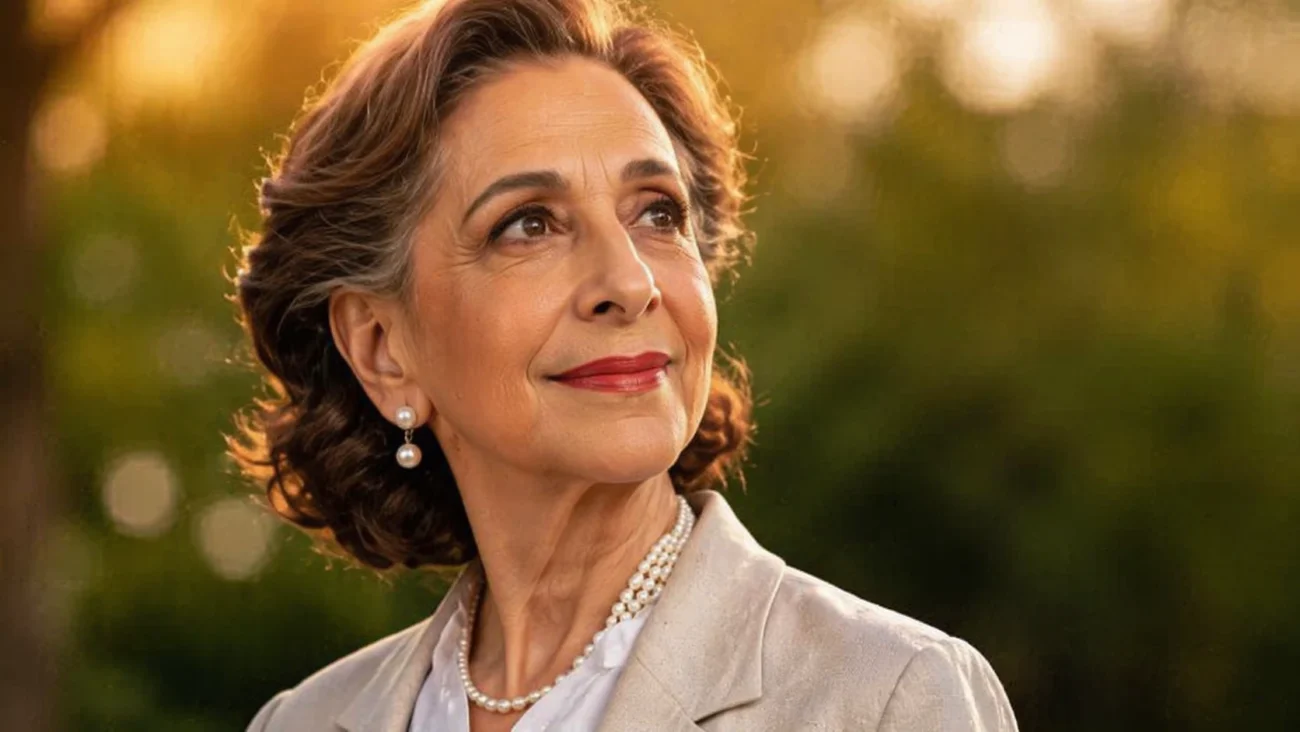
Most people don’t search for Arlene Litman because of something she did in the spotlight. They search her name because it appears quietly, almost in passing, in the biographies of Lisa Bonet and Zoë Kravitz. But here’s the thing: while Arlene Litman never sought fame, her life sits at the center of a story about family, identity, and cultural change in America.
She was a mother, a teacher, and by most accounts a private woman. Yet the impact of her life continues to ripple through generations, visible in the work and words of her daughter and granddaughter. To understand Arlene Litman is to understand a piece of a much larger narrative—one shaped by race, art, and the complexities of belonging.
Early Life and Family Background
Arlene Litman was born in the United States and is widely described as coming from a Jewish-American background. Details about her early years remain limited in public records, which is not unusual for someone who lived outside the entertainment industry. What is clear is that she grew up in a period when social expectations, especially around marriage and identity, were far more rigid than they would later become.
Her upbringing likely reflected the values of mid-20th-century American life, where family, education, and community played central roles. Not many people know this, but the absence of detailed documentation about her early life has contributed to the way her story is often reconstructed through the experiences of her daughter. That creates a challenge for writers: separating what is known from what is assumed.
Despite the gaps, her identity as a Jewish woman in that era becomes important later in her story. It shaped how her family responded to her choices and influenced the environment in which she would raise her child. Those early cultural ties didn’t disappear; they became part of a more complicated personal history.
Marriage to Allen Bonet and a Defining Era
Arlene Litman’s life took a defining turn when she married Allen Bonet, an African American opera singer. Their relationship came at a time when interracial marriage was still widely stigmatized in the United States. Although laws began to change in the late 1960s, social acceptance lagged far behind.
The truth is, their marriage placed them at the center of tensions that many couples of their time faced. Reports and later interviews suggest that Arlene experienced strain within her own family as a result of the relationship. Lisa Bonet has spoken publicly about feeling the effects of that divide, describing a sense of not fully belonging to either side of her family.
Here’s where it gets interesting. The story isn’t just about a marriage; it’s about the cost of that marriage in a specific historical moment. For Arlene, choosing her partner meant navigating social pressure and, at times, isolation. Those choices would shape not only her life but also the emotional landscape of her daughter’s upbringing.
Raising Lisa Bonet as a Single Mother
Lisa Bonet was born on November 16, 1967, in San Francisco, California. After Arlene and Allen Bonet separated, Lisa was raised primarily by her mother. This period defined Arlene’s most visible role in the public narrative: that of a single parent raising a child who would later become a well-known actress.
Being a single mother in that era came with its own challenges. It meant balancing financial responsibility, emotional support, and the demands of daily life without a partner present. While detailed accounts of Arlene’s day-to-day life are scarce, the broad outline is consistent—she provided a stable home and emphasized independence.
Lisa Bonet has described her childhood as one marked by a sense of difference. Growing up as a biracial child in a predominantly white environment, she often felt out of place. That experience, shaped in large part by her upbringing with her mother, would later influence her artistic voice and personal outlook.
Work and Professional Life
Arlene Litman is frequently described as a teacher, though specific details about her career remain limited in widely available sources. That said, the profession aligns with the role she appears to have played in her daughter’s life—structured, steady, and grounded in education.
Teaching, especially during the decades in which she worked, was often seen as both a vocation and a practical career choice. It provided stability, something particularly important for a single parent. But here’s the thing: beyond job titles, what stands out is the influence she had on Lisa Bonet’s intellectual and creative development.
There’s no public record of Arlene pursuing fame or recognition for her work. Instead, her professional life seems to have remained firmly outside the spotlight. That contrast—between a private career and a public legacy—defines much of how she is remembered today.
A Mother’s Influence on Identity and Art
Lisa Bonet’s career, which began in the 1980s with her role on The Cosby Show, brought attention to her distinctive presence and perspective. Over time, she became known for her independent spirit and refusal to conform to Hollywood expectations. It’s difficult to separate that identity from the environment in which she was raised.
Bonet has spoken about feeling disconnected from traditional definitions of race and belonging. She once described herself as existing between worlds, neither fully accepted in one nor the other. That sense of in-betweenness traces back to her childhood and, by extension, to Arlene’s role as her primary caregiver.
What’s surprising is how often Arlene’s influence appears indirectly. It shows up in Bonet’s choices, in her resistance to labels, and in her emphasis on authenticity. Even without public interviews or personal statements from Arlene herself, her presence is felt through her daughter’s voice.
Family Ties and the Next Generation
The story doesn’t end with Lisa Bonet. Arlene Litman is also the maternal grandmother of Zoë Kravitz, an actress, singer, and model who has built a successful career in her own right. Through Zoë, Arlene’s name has entered a new generation of public awareness.
Zoë Kravitz has occasionally referenced her family history in interviews and creative projects. One of the most visible examples came through her collaboration with Yves Saint Laurent Beauty, where a lipstick shade was named “Arlene’s Nude.” The name wasn’t random; it was a quiet tribute, a way of bringing her grandmother’s memory into a modern context.
That moment speaks volumes. It shows how a private life can still leave a mark that resonates decades later. Even without public recognition during her lifetime, Arlene Litman’s influence continues to surface in unexpected ways.
Personal Life and Privacy
Unlike many figures connected to celebrities, Arlene Litman did not become a public personality. There are no extensive interviews, no memoirs, and no public appearances that define her story. Instead, what exists is a patchwork of references—small pieces that, when assembled, offer a glimpse into her life.
That said, this level of privacy is important to respect. It also means that writers and readers alike must approach her story with care. There’s a difference between filling in gaps and acknowledging them, and Arlene’s biography requires that distinction.
Her personal life, beyond her marriage and role as a mother, remains largely out of the public record. While some sources attempt to provide additional details, not all of them are supported by reliable evidence. The responsible approach is to focus on what can be confirmed and to avoid speculation.
Later Years and Passing
Information about Arlene Litman’s later years is limited, and accounts of her death vary across sources. Some reports suggest she passed away in the 1990s, but precise details are not consistently documented in widely verified records. This lack of clarity is a reminder of how easily misinformation can spread when a person’s life is not extensively recorded.
What can be said is that her passing did not erase her presence from her family’s story. Lisa Bonet and Zoë Kravitz have both carried forward elements of her influence, whether through personal reflections or creative expressions. In that sense, her legacy extends beyond dates and formal records.
The absence of detailed information about her later life also underscores how much of her story remains private. For someone who lived outside the spotlight, that privacy was likely intentional.
Why Arlene Litman Still Matters Today
At first glance, Arlene Litman might seem like a footnote in celebrity biographies. But that reading misses the broader context. Her life intersects with key themes in American cultural history—interracial relationships, shifting social norms, and the experience of raising a biracial child in a changing society.
But here’s the thing. Her story also challenges the way we think about influence. Not all impact is visible or widely recognized. Sometimes it shows up in the lives shaped behind the scenes, in the values passed from one generation to the next.
As conversations about identity, race, and family continue to evolve, Arlene Litman’s story feels quietly relevant. It offers a reminder that personal choices made decades ago can echo in ways no one could have predicted.
Frequently Asked Questions
FAQ
Who was Arlene Litman?
Arlene Litman was an American woman best known as the mother of actress Lisa Bonet and the maternal grandmother of Zoë Kravitz. She lived a largely private life and did not pursue a public career in entertainment. Most information about her comes through references in her daughter’s biography. Despite limited public records, her role in her family’s story has kept her name in circulation.
Was Arlene Litman Lisa Bonet’s mother?
Yes, Arlene Litman was Lisa Bonet’s mother. Lisa Bonet was born in 1967 to Arlene Litman and Allen Bonet. After her parents separated, she was primarily raised by her mother. This upbringing played a significant role in shaping Bonet’s perspective on identity and belonging.
What was Arlene Litman’s background?
Arlene Litman is widely described as having a Jewish-American background. She grew up in the United States during a time when cultural and social expectations were more rigid than they are today. Her heritage became part of a more complex family story after her interracial marriage. Details about her early life remain limited in verified public sources.
What did Arlene Litman do for a living?
Arlene Litman is often described as a teacher, although specific details about her career are not widely documented. This profession aligns with her role as a single mother providing stability for her daughter. She did not have a public-facing career and remained outside the entertainment industry. Most of her life was spent away from the spotlight.
Why is Arlene Litman connected to Zoë Kravitz?
Arlene Litman is Zoë Kravitz’s maternal grandmother. Zoë has referenced her family history in various ways, including naming a lipstick shade “Arlene’s Nude” in a beauty collaboration. This tribute brought renewed attention to Arlene’s name. It reflects how her influence continues to be felt across generations.
Read also: Meredith Schwarz: Biography, Career, and Personal Life
Conclusion
Arlene Litman’s life doesn’t fit neatly into the kind of biography often written about public figures. There are no headline-making achievements or widely documented milestones. Instead, her story exists in the spaces between other people’s narratives, quietly shaping them from the inside.
That doesn’t make her story any less meaningful. In many ways, it makes it more relatable. She represents the countless individuals whose lives influence culture without ever being recognized as part of it. Her choices, especially in a time of social tension, had lasting consequences for her family.
What stands out is not just what is known about Arlene Litman, but what can be understood through those who came after her. Lisa Bonet’s sense of identity, Zoë Kravitz’s creative expressions, and the broader conversation around race and belonging all carry traces of her presence.
And that’s where her story continues. Not in headlines or archives, but in the ongoing lives of the people she raised and inspired. Even in the absence of full documentation, her legacy remains visible—subtle, enduring, and still unfolding.
